The cannon Prøven
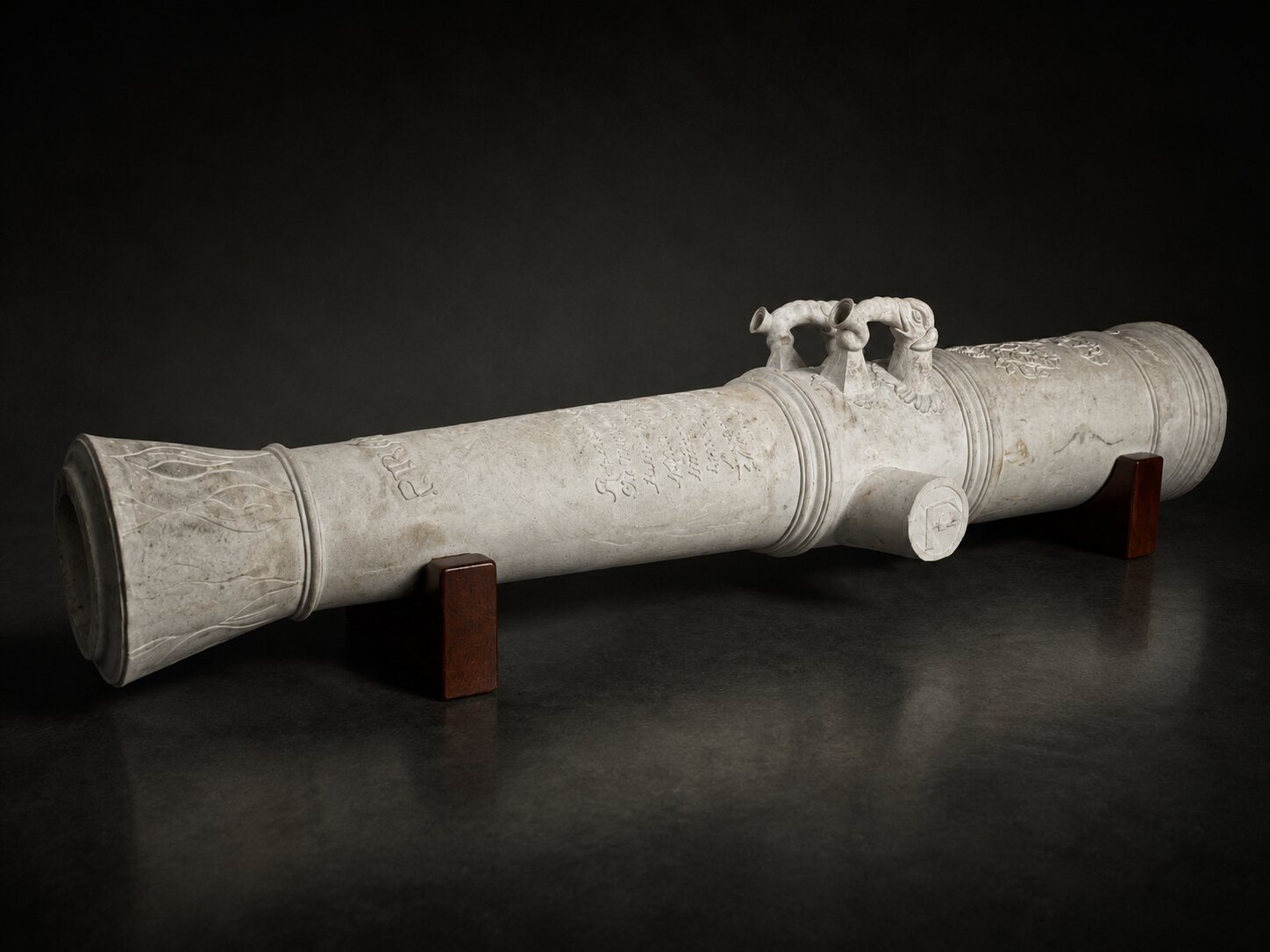
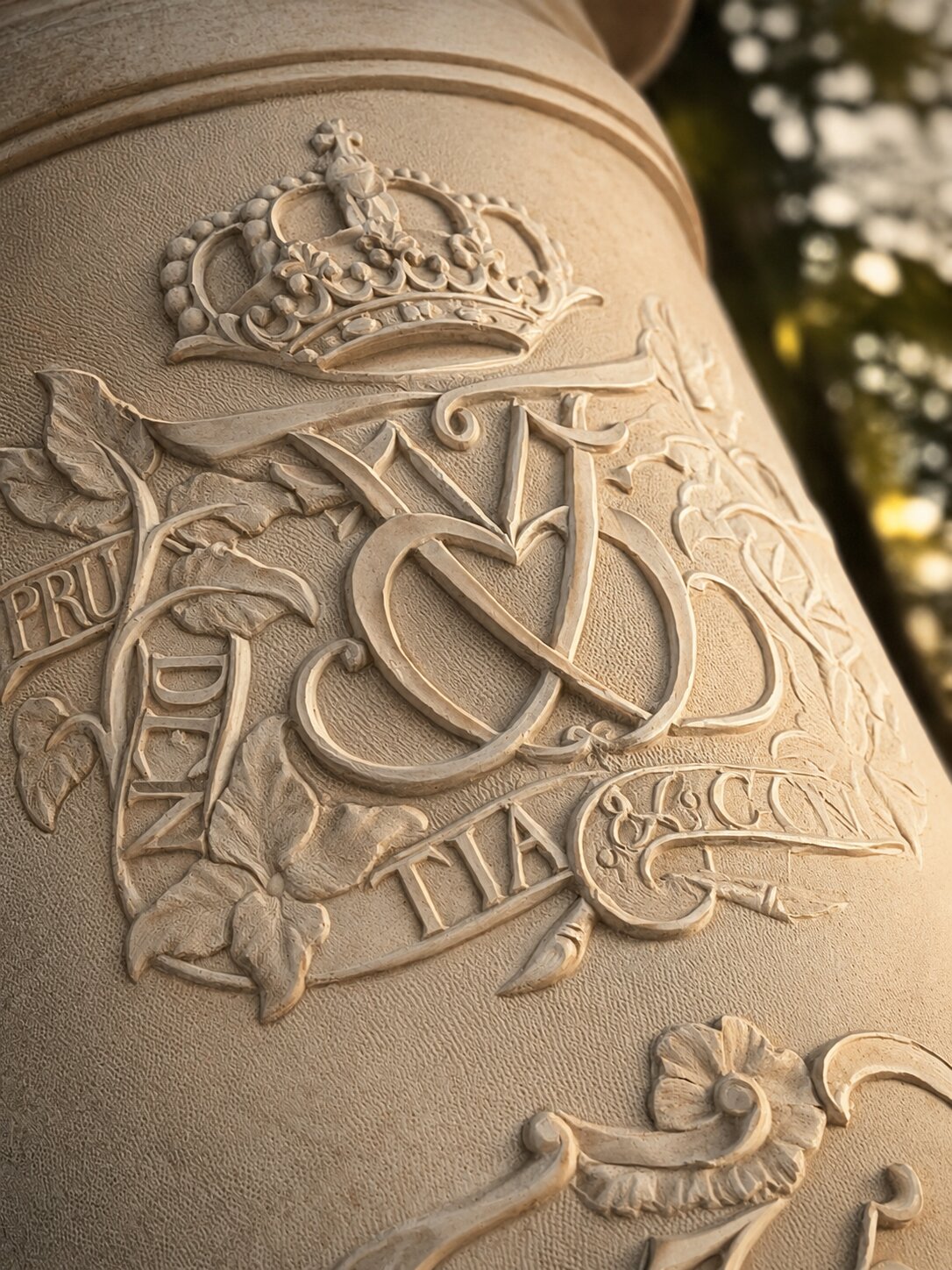
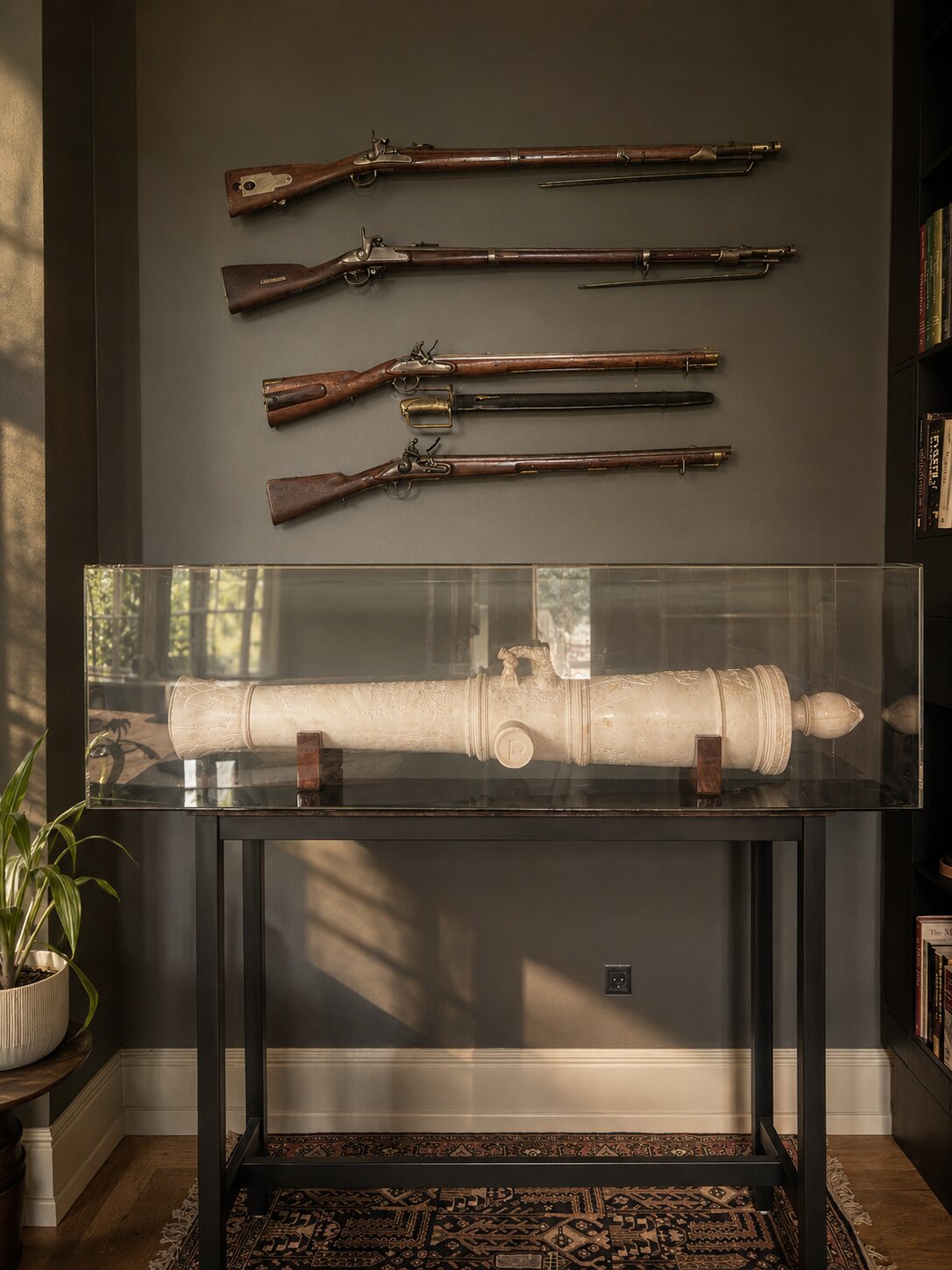
Prøven is the name of a cannon whose purpose was to test the works’ ability to cast heavy ordnance. The cast at Møllenborg reproduces the cannon in white and makes it possible to study its form, barrel and inscriptions at close range.
Frederik V, Classen and Frederiksværk
Under Frederik V, the works at the outlet of Lake Arresø were developed into a unified industrial area. Classen took over the operation together with Fabritius and made Frederiksværk a centre of Danish weapons and powder production.
The proof firing in 1759
In 1759, the proof firing took place at Københavns Gjethus. It concerned more than the technical quality of the cannon itself. It also formed part of the question of who could supply heavy ordnance to the state, and how Denmark should organise its own cannon production.
A test with political and economic weight
The proof firing took the form of a competition in which Classen competed against Hornhaver. The outcome should be seen in the context of Frederik V, Frederiksværk and the state’s wish for stronger Danish cannon production. It was a technical trial, but also part of a larger economic and political project.
Peter Hersleb Classen’s commemorative programme
After Classen’s death in 1792, his heir Peter Hersleb Classen shaped a deliberate commemorative culture around his achievements — monuments and objects intended to preserve his legacy.
The Vinderød monument and the cast
The monument at Vinderød forms part of Classen’s legacy. The white cast has been linked to this monument — a connection that is elaborated below and should be stated with reservation.
The cast’s path to Møllenborg
According to the transmitted provenance, the white cast was found around 2015 in a box beneath the floor at Amaliegade 40 in Copenhagen during a renovation. The find was made by a carpenter, who later sold the object on DBA. It was then bought by Jan Kramer in Frederiksværk, and from there it came to Møllenborg. The carpenter did not wish to assist with a closer investigation of the find history, and this part of the story is therefore presented with reservation.
The master copy
The cast may be a working model connected to the monument at Vinderød. If this interpretation is correct, it is not merely a later copy, but a model that served a practical function in the making of the monument. This connection should be stated with reservation.