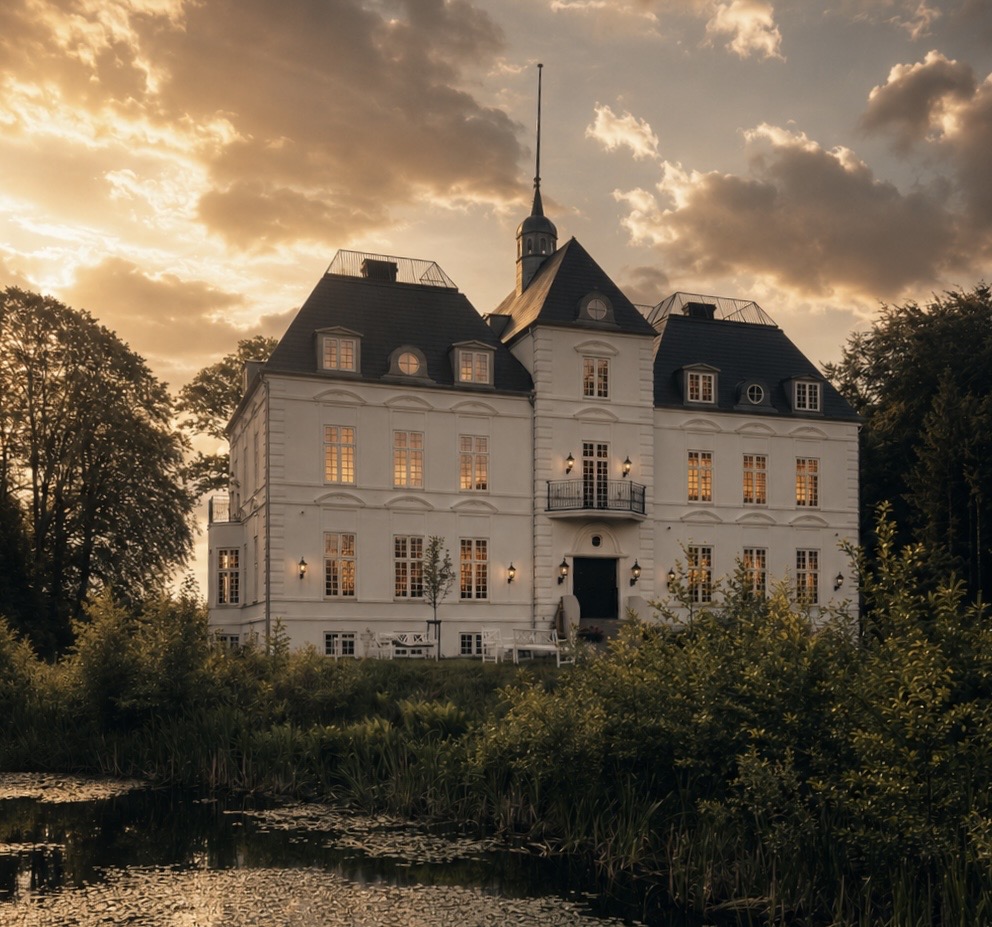
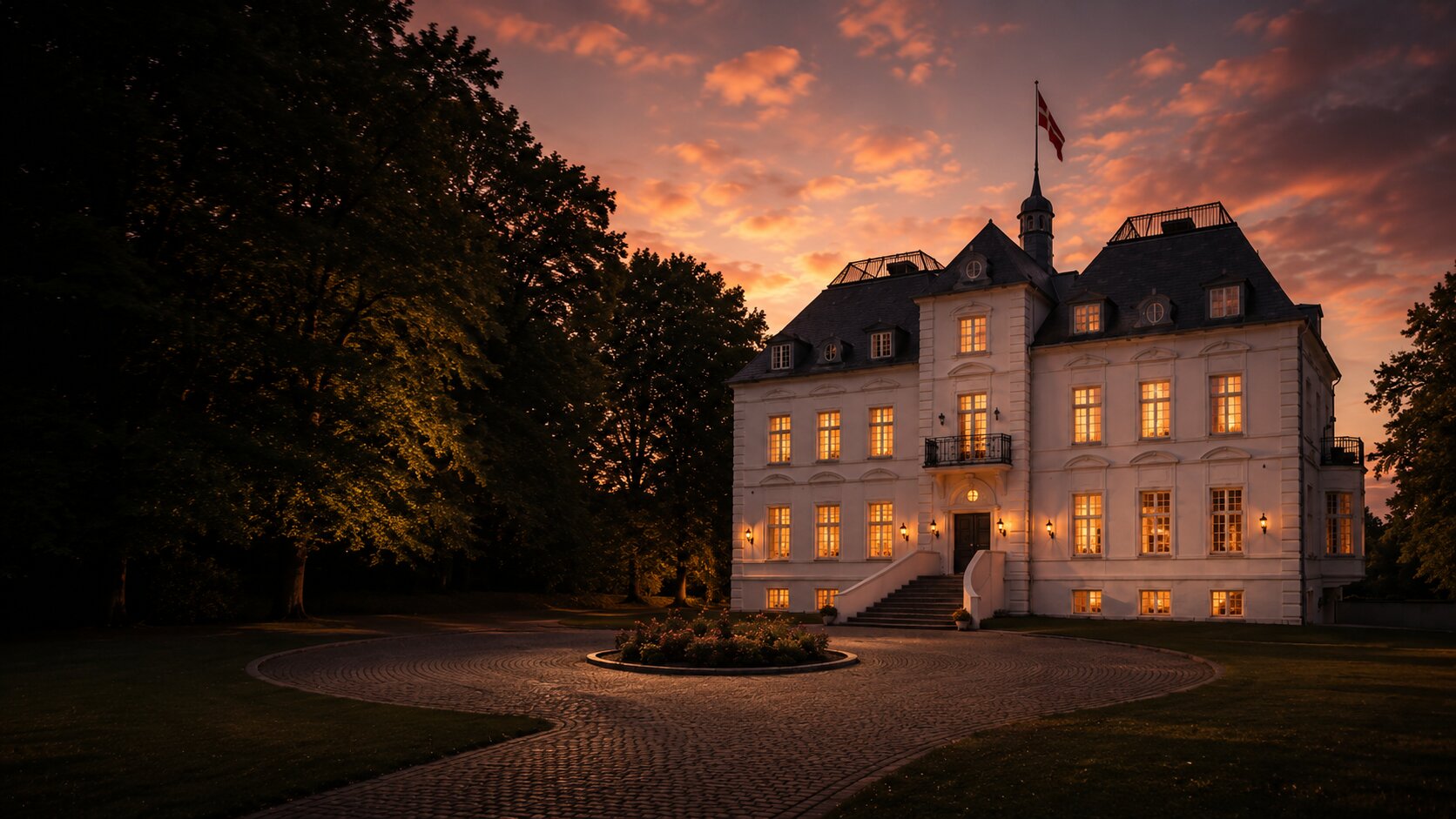
The castle exterior at sunsetimages/slot-hero.jpgThe castle exterior at sunset
Møllenborg Slot

History of the site

Møllenborg stands in a landscape that was used long before the present house was built. Here there are traces from the Neolithic, burial mounds from the Bronze Age, older farm history, woodland, fields and access ways. The castle is the newest layer in a landscape that already had form and history.

01

Traces of prehistory

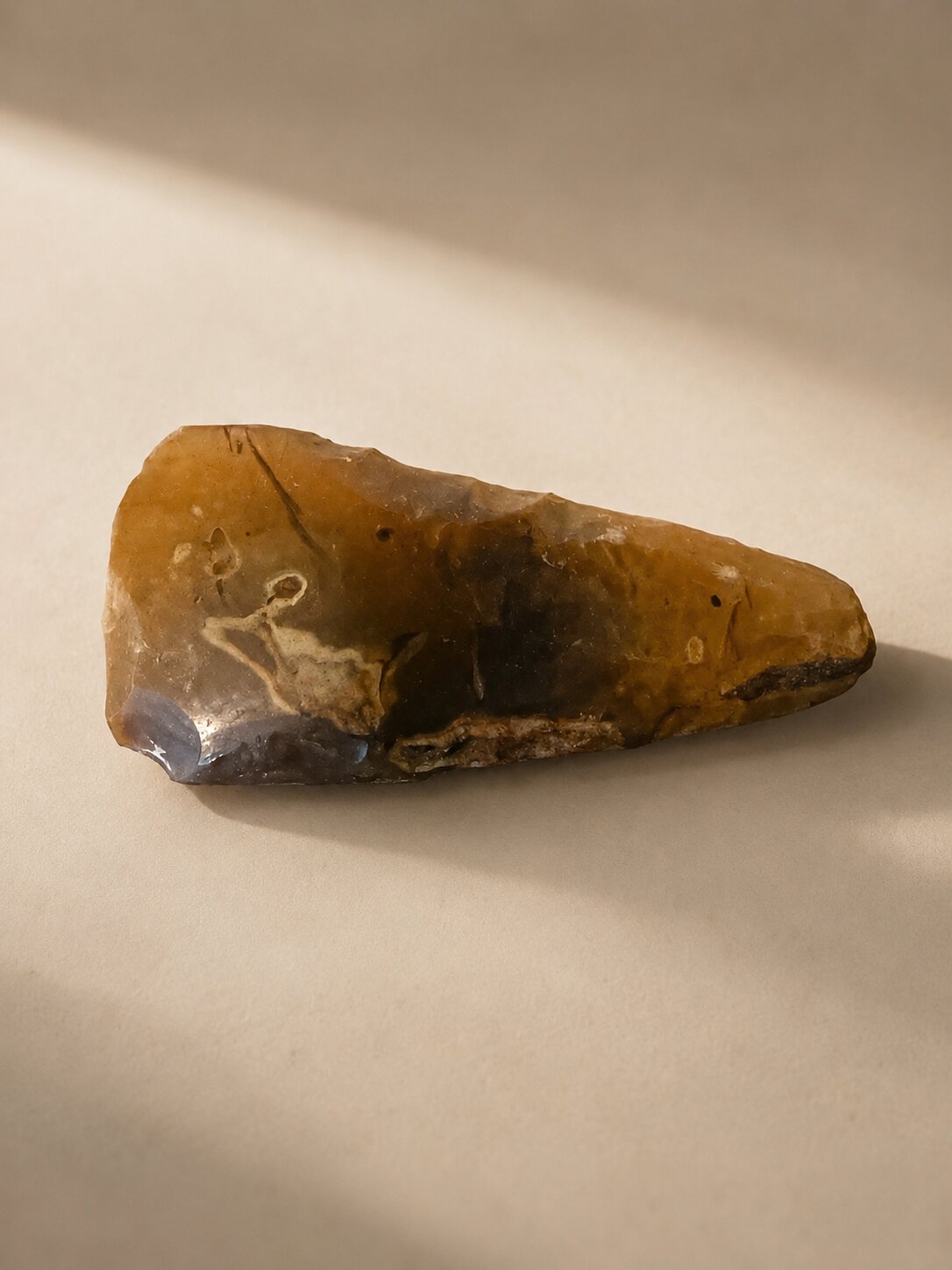
Thin-butted flint axe, Neolithic, c. 3900–3300 BC

02

The Bronze Age landscape

Burial mounds around the house, c. 1700–500 BC

03

The farm before the castle

Farm history back to at least the mid-nineteenth century.

04

The modern castle

The new building as the latest layer in the history of the site.

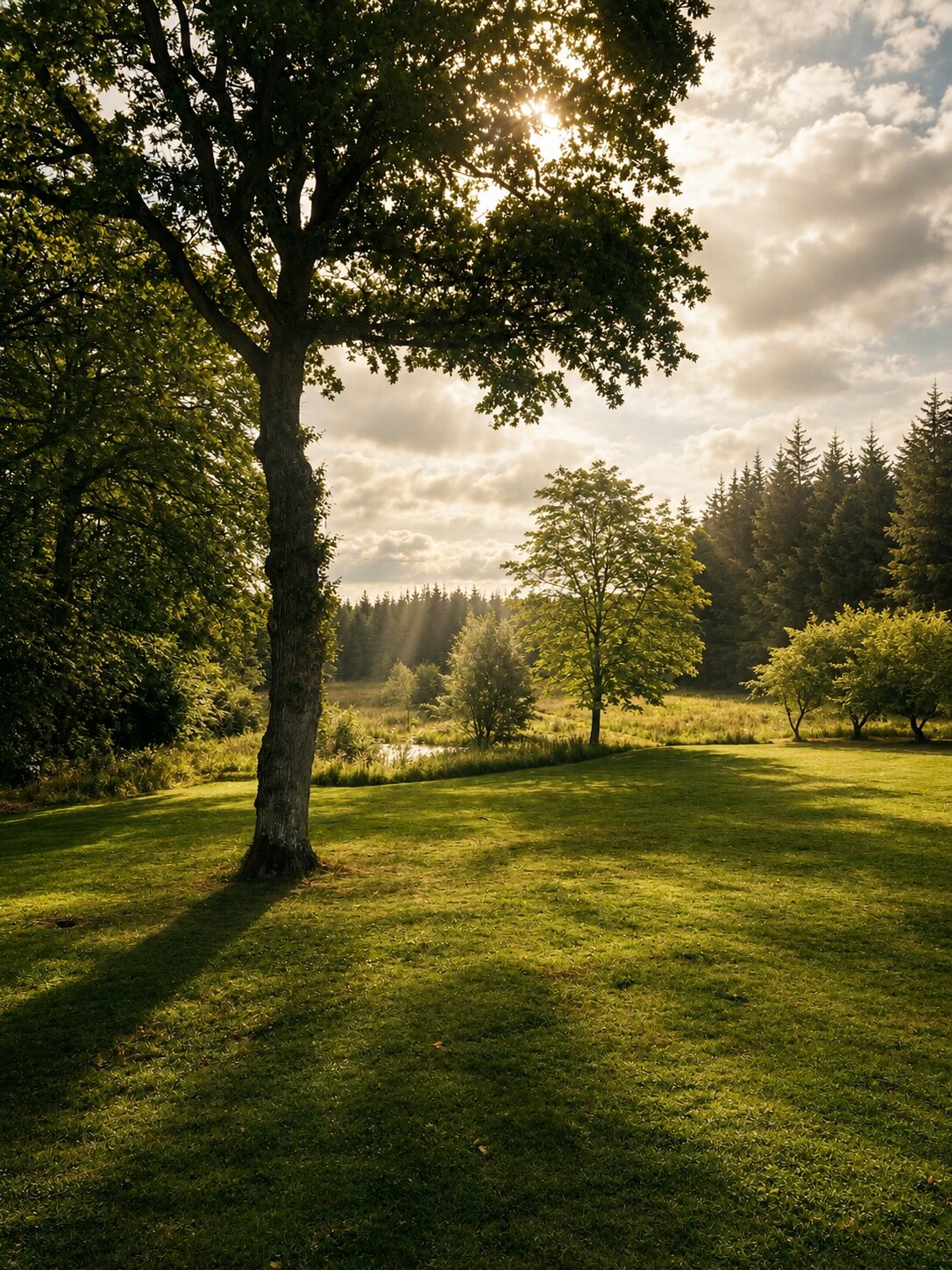
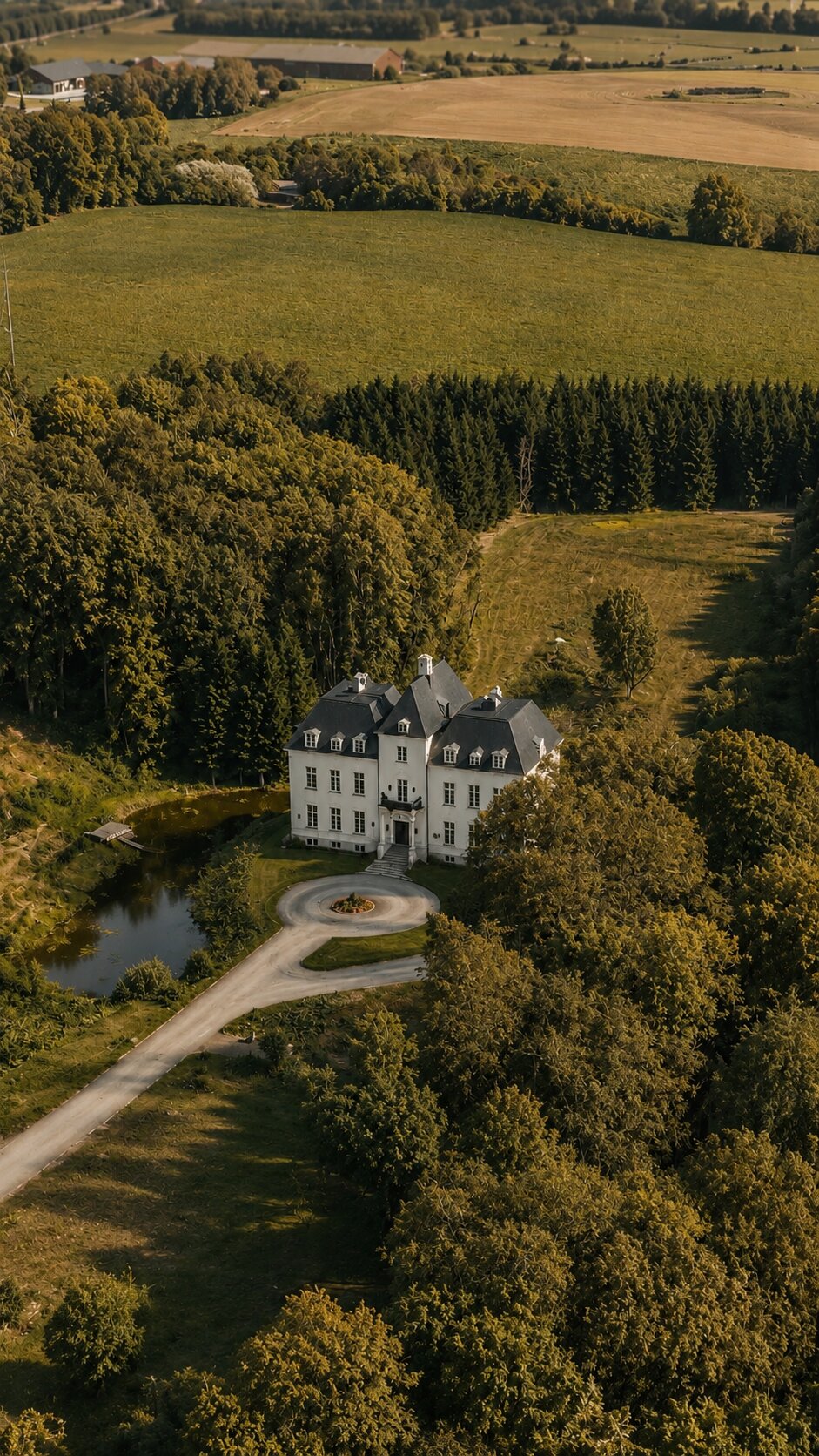
The castle in the landscapeimages/slot-landskab.jpgThe castle in the landscape

A new castle on an old site

Møllenborg should be understood as a new castle on an old site. The building adds itself to a longer story of land, woodland, people and the use of the landscape.

The axe from the gardenimages/okse.jpgThe axe from the garden

The thin-butted axe

Among the oldest tangible traces from the area is the thin-butted flint axe found in the soil of the castle garden. The type belongs to the Neolithic and can probably be dated to the earlier part of the period, around the middle of the fourth millennium BC. That makes it approximately 5,500 years old.

The axe points to one of the major changes in Danish prehistory. During the Neolithic, people increasingly began to clear woodland, cultivate the soil, keep livestock and build more permanent structures in the landscape. The polished flint axe was an important tool in that development: with it, trees could be felled, timber shaped, houses built, fences erected and fuel obtained.

Life at this time was closely connected with woodland, water, soil and the rhythm of the seasons. The people who used axes like this lived in a landscape where woodland still dominated, but where openings for fields, grazing areas and settlements were slowly being created. Grain, cattle, sheep, goats and pigs became part of everyday life, while hunting, fishing and gathering continued to matter.

The flint axe was both a practical tool and an object of social significance. Good axes required skill, time and access to suitable flint. Some were used in work, while others were made and preserved as particularly fine objects.

Depositions of axes, amber and other valuable things in bogs, lakes, watercourses and other wet places are also known from the Neolithic. Such finds are often interpreted as offerings, but their precise meaning is unknown. They may have been connected with fertility, harvest, community, status or ideas about the powers of water and landscape.

The axe at Møllenborg should therefore be seen first and foremost as a prehistoric find from the site. At the same time, it opens a wider perspective on a period when people began to shape the landscape in new ways, and when tools, land, woodland and water formed part both of everyday work and of ideas we know only through the traces in the soil.
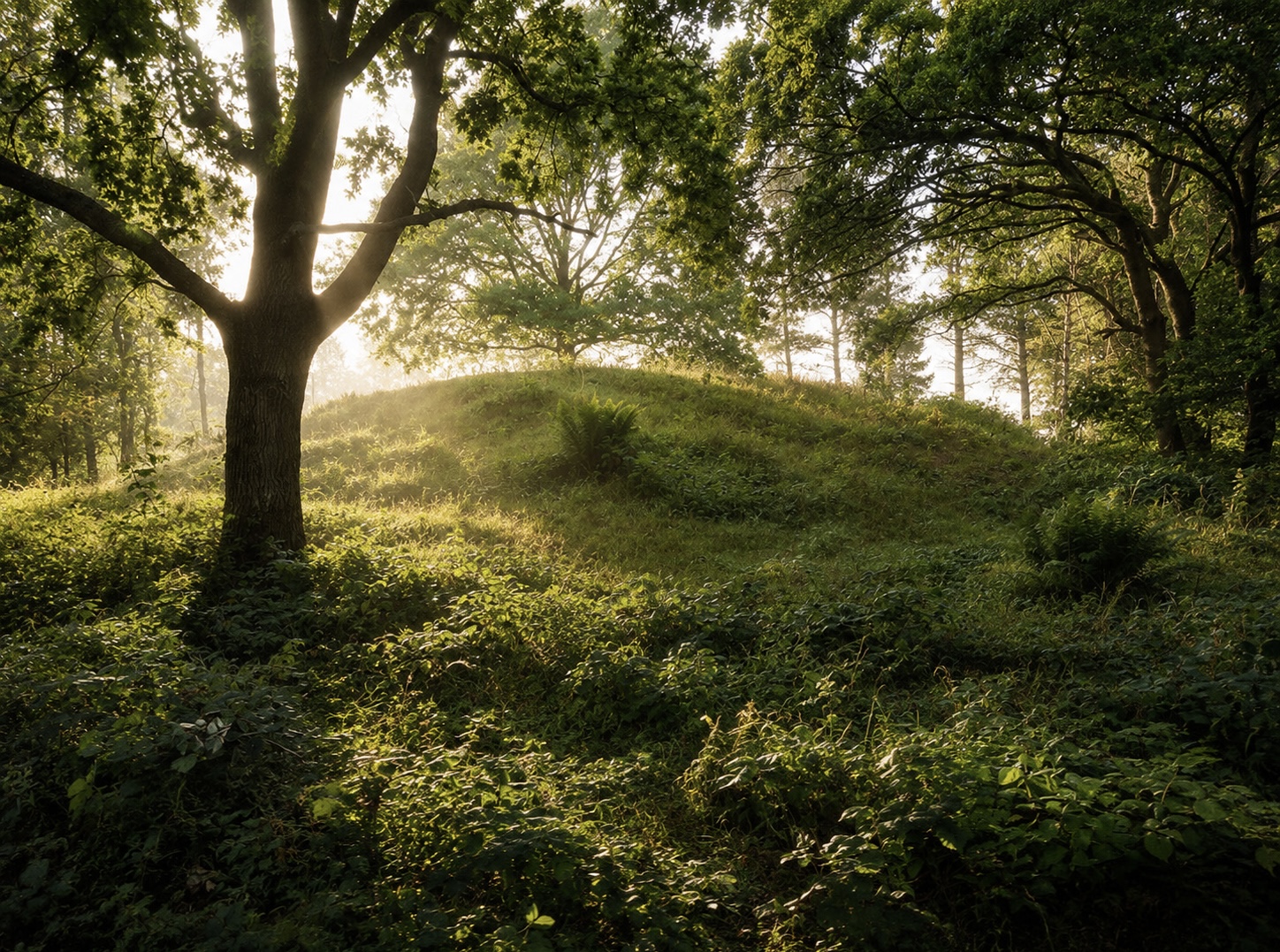
Burial mound in the landscapeimages/gravhoej.jpgBurial mound in the landscape

The Bronze Age burial mounds

In the landscape around Møllenborg lie burial mounds from the Bronze Age. They show that the area also held significance for the people who lived here in the following millennia.

The burial mounds were not only graves. They were also visible markers in the landscape. They lay where they could be seen, and where they could maintain the connection between kinship, land and territory. In an open or semi-open Bronze Age landscape, the mounds would have been fixed points around which people moved, worked and orientated themselves.

Together with the thin-butted axe, the mounds show that the landscape of Møllenborg contains traces from several prehistoric periods. They do not tell a continuous story in the modern sense, but they show that the place formed part of people’s use of the landscape long before the present property.

Fieldsimages/marker.jpgFields

The farm before the castle

Before Møllenborg was built, the site formed part of an older farm and woodland landscape. The sources take the farm history back at least to the mid-nineteenth century, but the use of the landscape is older than the buildings.

Cultivated land, woodland, boundaries and access ways existed here long before the present house was drawn. The site was therefore not an empty building plot, but a used landscape with its own lines, structures and traces.

Modern Møllenborg stands in continuation of this history. The castle changed the place, but it was built in a landscape already shaped by cultivation, nature, woodland and human labour through generations.

The castle reflected in the lakeimages/slot-soe.jpgThe castle reflected in the lake

The latest chapter

Work on Møllenborg began in 2016. Construction itself began in mid-2020, and the house was occupied at the end of 2021.

The castle is therefore new, but it stands on a site with far older traces in the soil and the landscape. This connection between the new house and the older landscape is the starting point for the story of Møllenborg.

Read about the castle