The woodland with light through the treesimages/skov-hero.jpgThe woodland with light through the trees
Nature

The forest

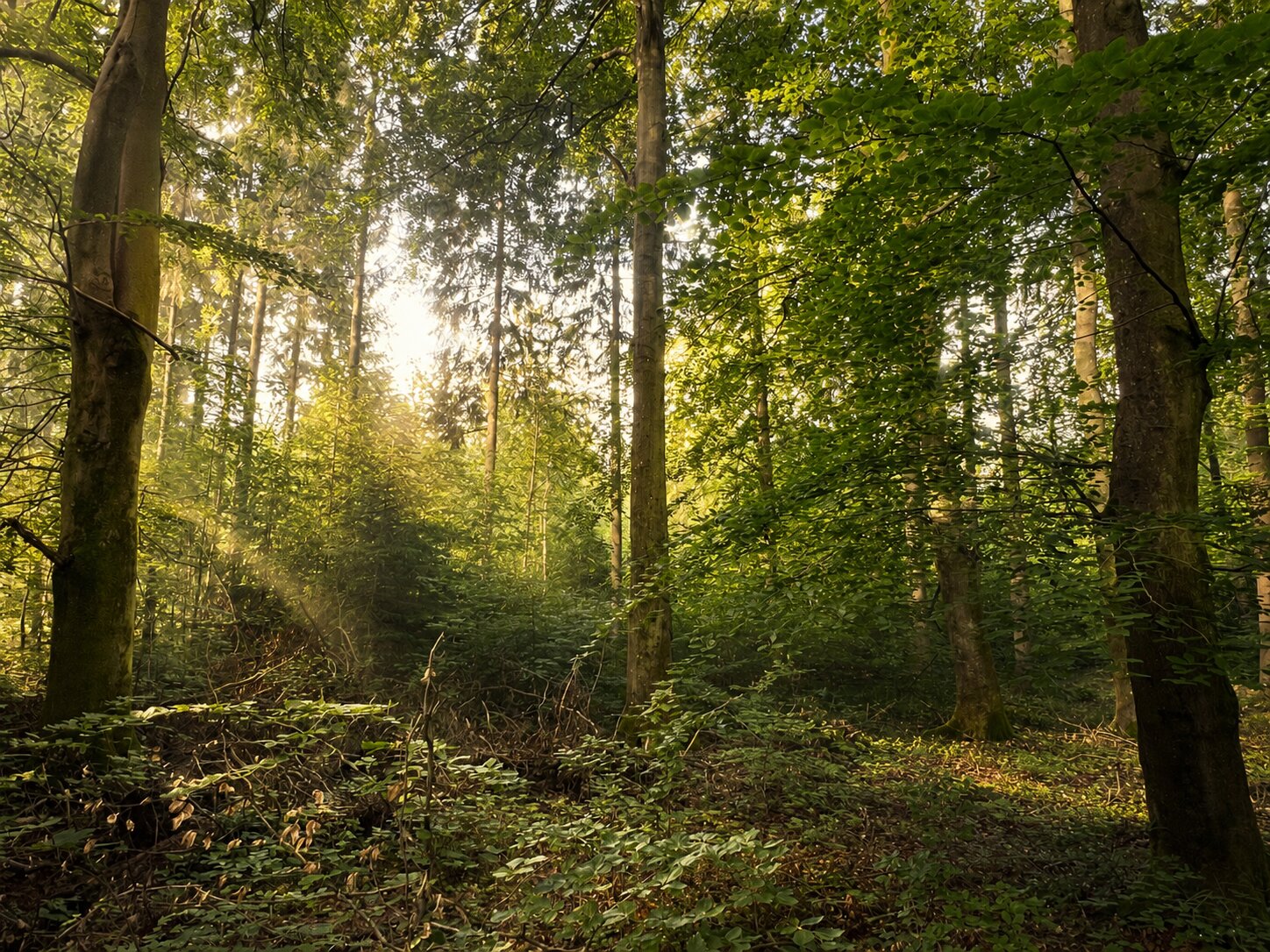
The forest around Møllenborg covers approximately 15 hectares and is an important part of the estate landscape. It is protected woodland and, together with the fields, garden and access roads, forms the setting for the new castle.

Old oak / woodland floorimages/egetrae.jpgOld oak / woodland floor

The forest around Møllenborg

The forest is significant in both natural and cultural history. It contains trees, paths, animal tracks, hollows, deadwood and traces of earlier use, while also telling the story of how Danish forests have been regulated, managed and understood over recent centuries.


Protected woodland

The forest at Møllenborg is protected woodland. This means the area has special legal protection and, as a rule, must remain forested.

The concept is connected with the Danish forestry crisis around 1800. For centuries, forests had supplied timber, firewood, pannage, grazing, fencing material and many other resources. The pressure was intense, and forest cover had been greatly reduced.

The Protected Forest Ordinance of 1805 established a new basis for preserving and restoring Denmark's forests. Forests were to be protected from further clearance, and forestry was increasingly separated from grazing and other agricultural uses. Protected woodland is therefore both a legal status and evidence of a decisive change in Danish landscape management.

At Møllenborg, protected status means that the forest is a permanent part of the estate's character, belonging to the site just as much as the fields, garden, access roads and house.
A working forest

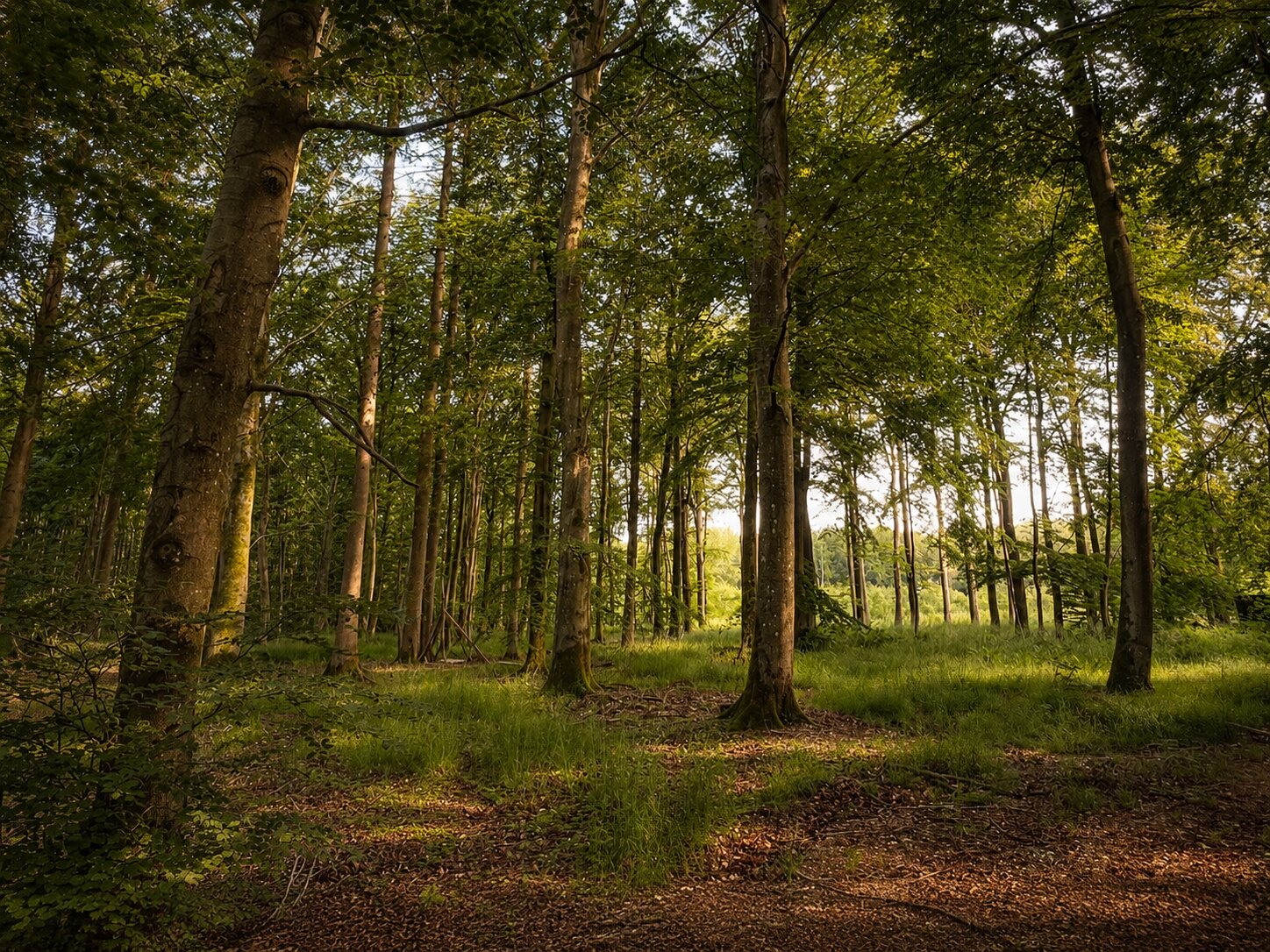
The forest around Møllenborg should be understood as a working landscape. Historically, Danish forests have rarely been untouched. They have provided timber, firewood, grazing, hunting, shelter, routes and access through the landscape.

Traces of use may be obvious or almost invisible. A path, an old wheel track, an opening in the vegetation, a change in tree species or a hollow with different plant life may show that people and animals have moved through the area for a long time.

This makes the forest more than nature alone. It is also an archive of management, access, boundaries and practical choices.

Woodland floor and deadwoodimages/skovbund.jpgWoodland floor and deadwood

Trees and forest floor

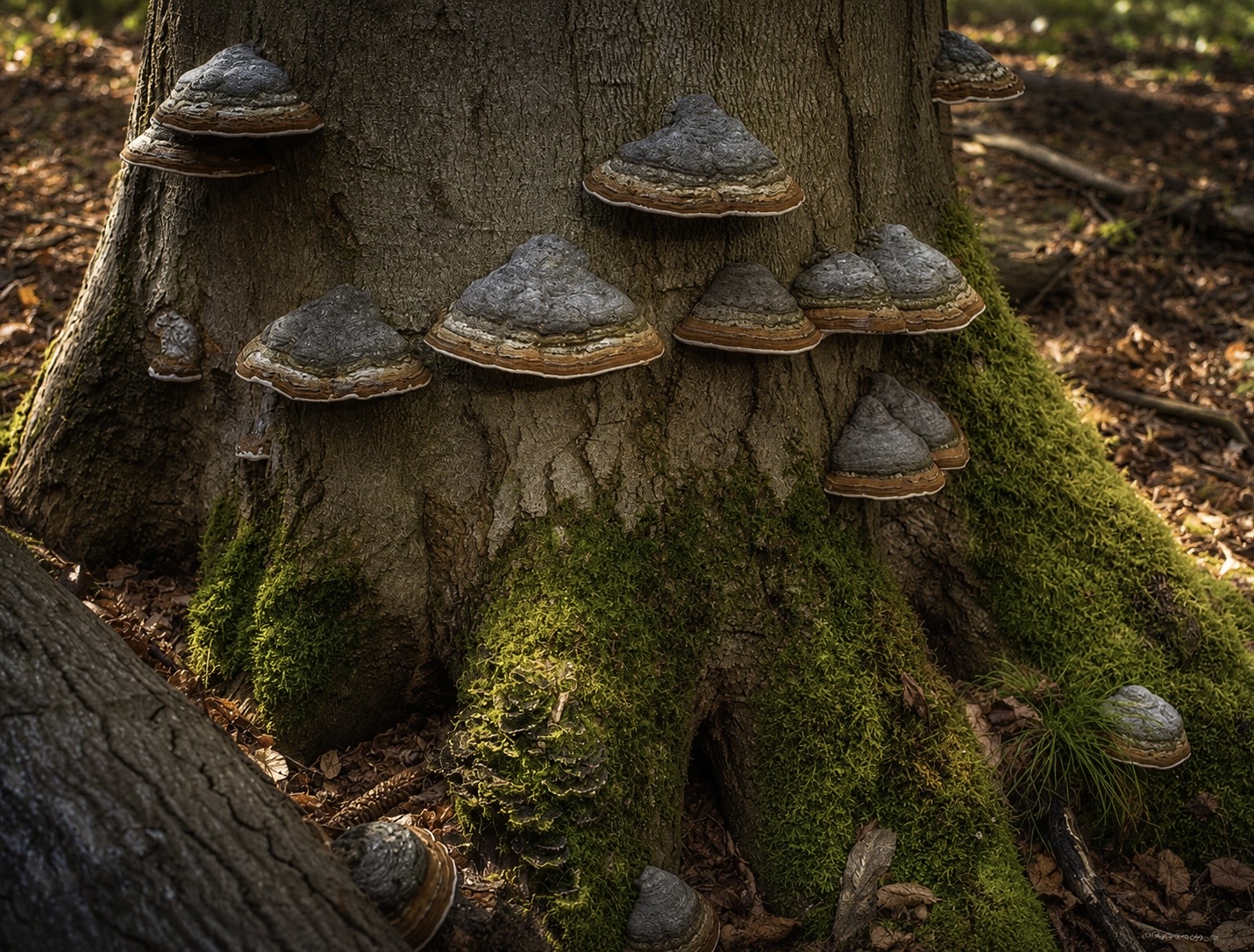
The forest contains older trunks, younger growth, moss, fungi, leaves, deadwood and openings in the canopy. Its value lies particularly in this variety.

Deadwood is a good example. In a tidy garden, dead wood may seem like something to remove. In a forest, it is an important part of the life cycle. Fungi, beetles, insects, birds and small animals depend on wood at different stages of decay. When old trunks and branches are left in place, they create habitats absent from a more thoroughly cleared forest.

The forest floor also reveals the forest's rhythm. Spring, shade, falling leaves and moisture create changing conditions for herbs, fungi and small animals. The forest changes slowly, but it is always changing.

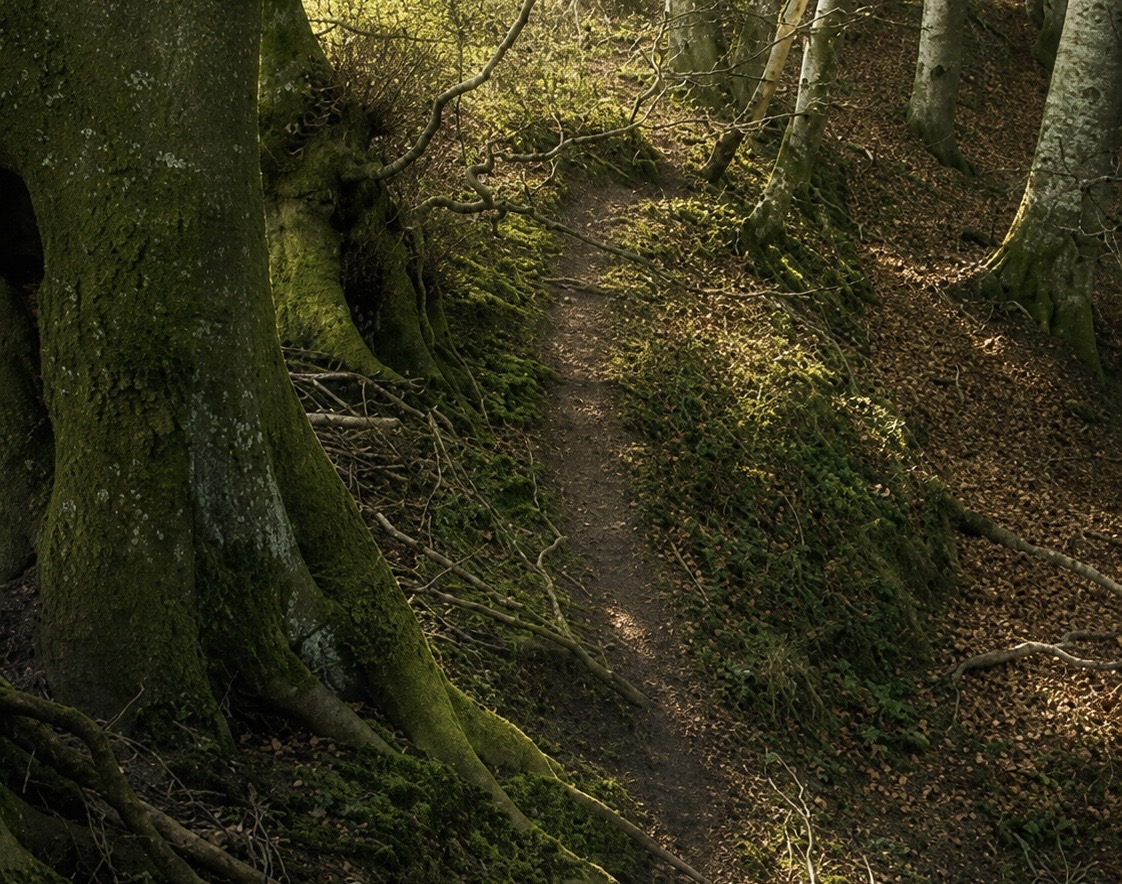
Path through the woodlandimages/sti.jpgPath through the woodland

Paths and old routes

The forest paths connect the house, garden, fields and open countryside. Some were laid out deliberately; others follow older routes through the terrain.

Paths tell of use. They show where it was natural to walk, drive, work or pass through. In an older landscape, paths and access roads are rarely arbitrary. They follow terrain, soil, boundaries, water, forest edges and practical needs.

At Møllenborg, the paths are therefore part of the whole. They make the forest a landscape to move through, rather than merely view from a distance.

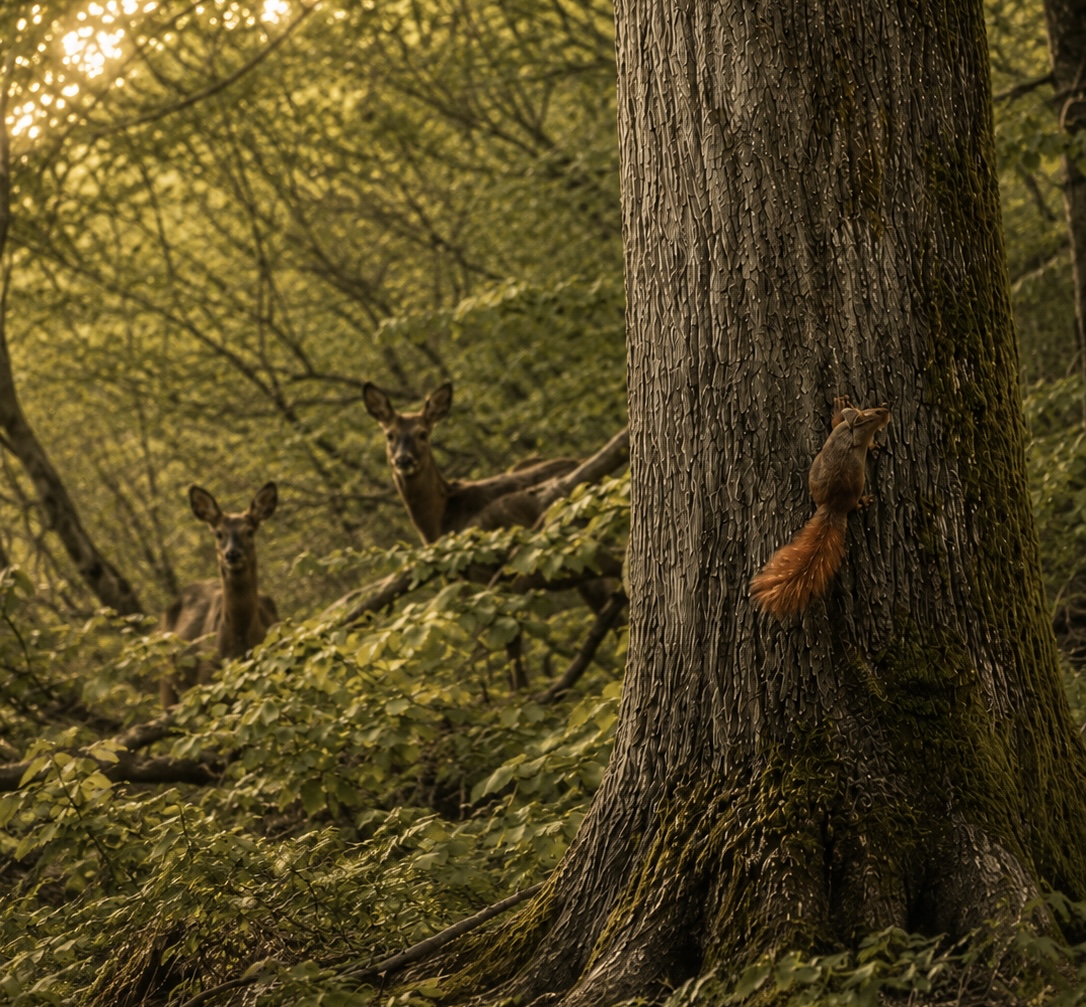
Wildlife in the woodlandimages/dyreliv.jpgWildlife in the woodland

Wildlife

The forest and landscape around Møllenborg are home to roe deer, birds and small animals. White-tailed eagles are regularly seen above the area and inspired some of the house's bronze and brass work.

Wildlife depends on the landscape's variety. Forest, open fields, hedgerows, old trees, hollows and undisturbed corners offer different opportunities to different species. A varied estate contains many small environments close together and supports more life than a uniform landscape.

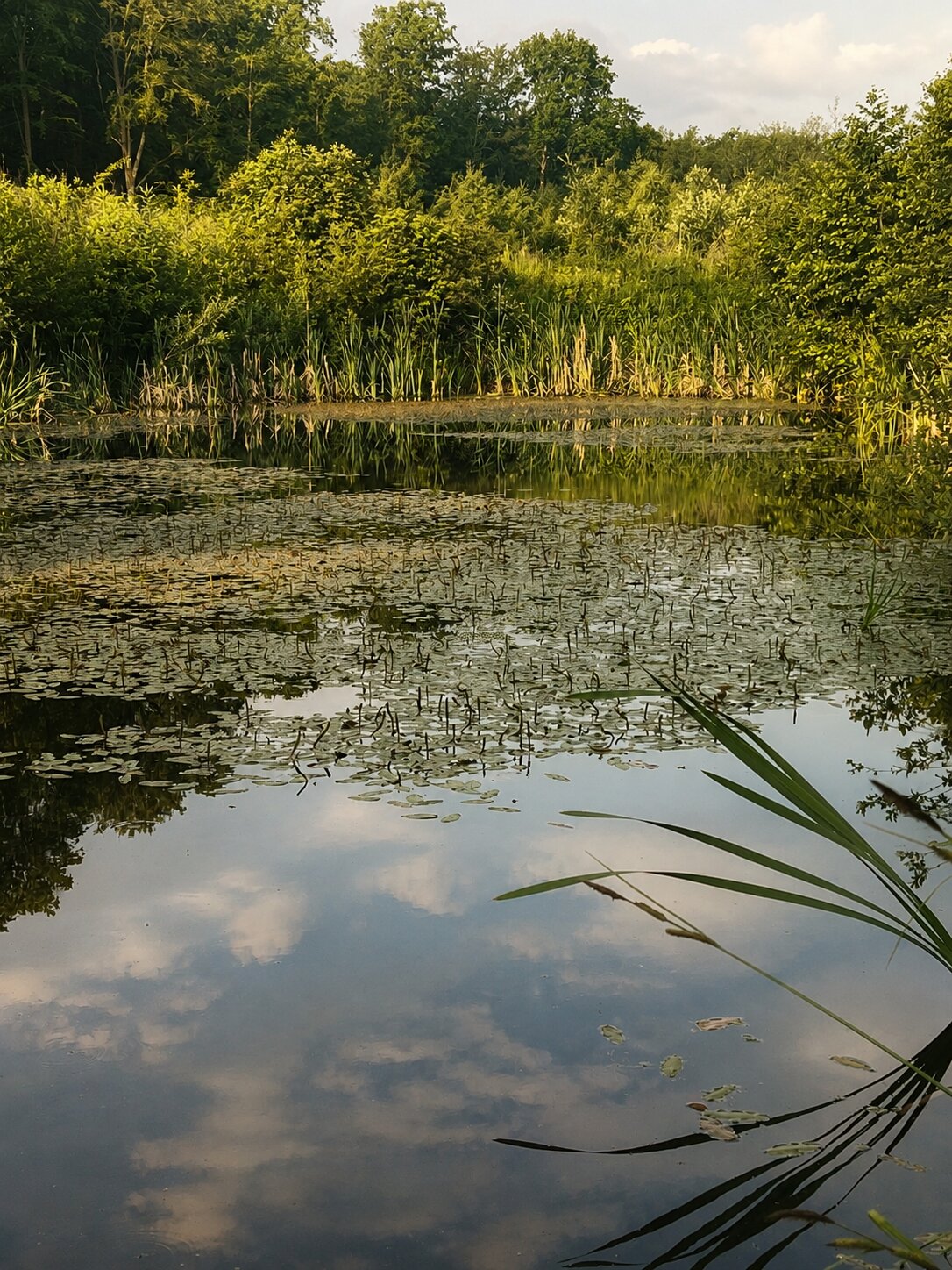
Lake / waterimages/vand.jpgLake / water

Hollows and water

Hollows and damp areas affect the forest's appearance and the species able to live there. They change the vegetation, the traces in the terrain and the way one moves through the forest.

Water also has a cultural-historical dimension. Damp areas have often influenced where paths were laid, where land could be cultivated, where forest remained and where the landscape was harder to exploit intensively. In this way, hollows and wetlands are part of both nature and history.

The forest today

Four things to notice

Protected woodland

Woodland protected as permanent forest. A result of Danish forest history and legislation.

Deadwood

Trunks and branches in decay, providing habitats for fungi, insects, birds and small animals.

Paths

Routes through the landscape, where use, terrain and access ways can be read.

White-tailed eagles

Large birds of prey over the area and the motif for some of the house’s bronze and brass details.

The forest as part of Møllenborg

The forest is part of Møllenborg's wider story. It shows that the site is more than the house: protected woodland, fields, garden, paths, wildlife, old patterns of use and the landscape's long development.

Here one can see how Danish nature is often cultural history as well. The forest is shaped by trees, animals and soil, but also by legislation, management, access and the ways people have used the landscape.